A modern kitchen does more than cook food. It shapes your daily routine. It influences the comfort of your home. It even affects how you feel inside the space. In cities like Mumbai, where apartments are compact and ventilation is often limited, a well-planned chimney can make a noticeable difference. It keeps the air clean. It protects your cabinets. It supports the design theme of your kitchen.
Yet many homeowners pick a chimney based only on looks or price. This approach leads to noise issues, weak suction, heavy smoke, or poor fit. This guide explains every point you must know before selecting a chimney that suits your kitchen design, lifestyle, and cooking habits.
How Many Types of Kitchen Chimneys Are There?
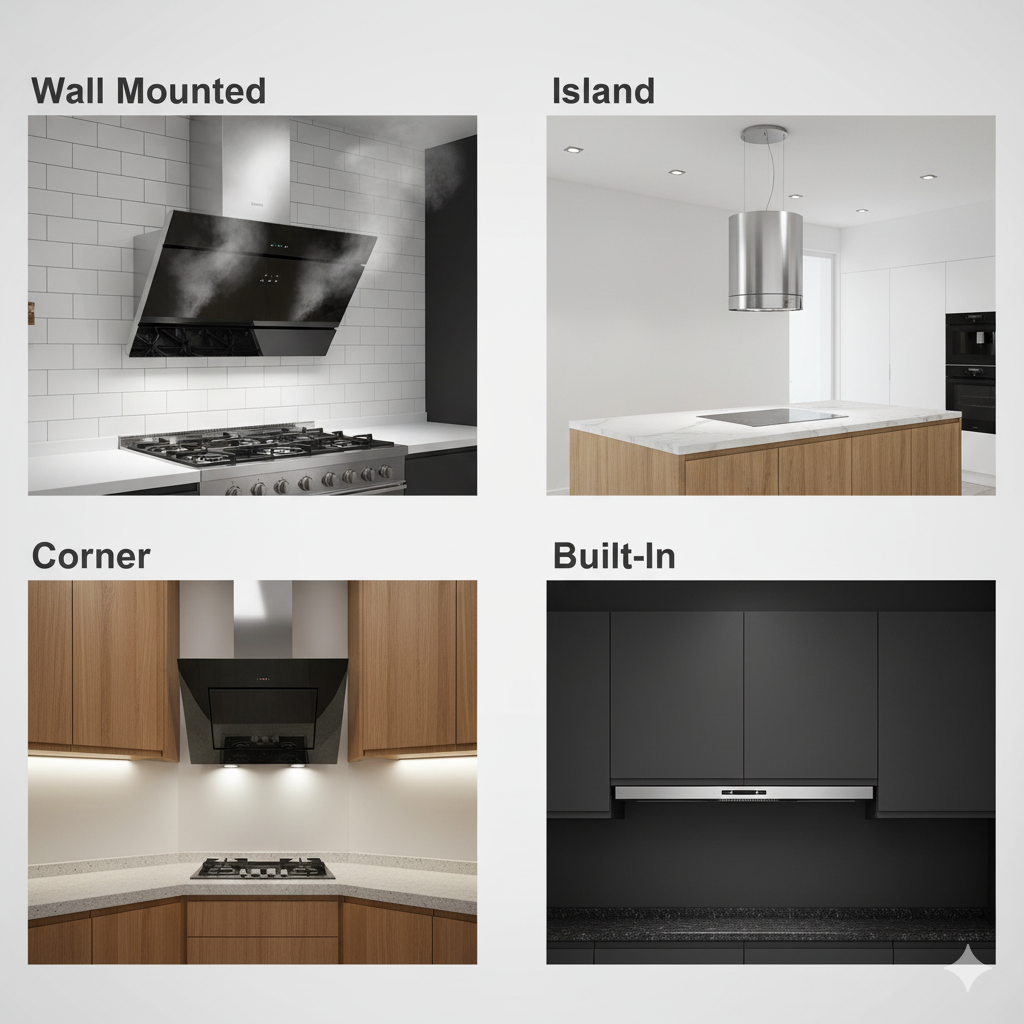
Kitchen chimneys come in a few main types, each designed to suit a specific layout and cooking style. The four most commonly used options in Indian and Mumbai homes are wall-mounted, island, corner, and built-in chimneys. Wall-mounted chimneys sit against the wall and work best for straight counters, making them the top choice for most households. Island chimneys hang from the ceiling and suit open kitchens where the cooktop sits in the centre. Corner chimneys are designed for hobs placed diagonally in tight layouts, offering a space-saving alternative. Built-in chimneys stay hidden inside overhead cabinets, ideal for modular kitchens that prioritise clean, seamless design. Each type has unique advantages, so the best choice depends on your kitchen’s layout, available space, and the look you want to achieve.
1. Start With the Type of Cooking You Do
Chimneys work differently for different households. So the first step is to study your cooking style.
Indian cooking often includes frying, sautéing, and tempering. These tasks release strong fumes and heavy grease. Homes that cook two to three full meals a day need a powerful chimney with strong suction. On the other hand, light cooking such as boiling, reheating, or baking produces mild fumes. In such homes, a moderate-capacity chimney works fine.
Also think about the use of spices and oil. If you cook with mustard seeds, curry leaves, or ghee daily, the air gets oily very fast. A chimney with better filtration protects your kitchen from long-term damage. This also reduces the time you spend scrubbing tiles and cabinets.
2. Understand the Main Types of Kitchen Chimneys
Chimneys come in different models. Each fits a specific layout. Here are the three common types used in Mumbai homes.
Wall-mounted chimney
This model sits against a wall. Most Indian kitchens follow this layout. It suits straight counter designs. Wall-mounted units are affordable and strong.
Island chimney
You need this if your hob or cooktop sits at the centre of the kitchen. The chimney hangs from the ceiling. It creates a bold design effect. It also requires more space and a strong ceiling structure.
Built-in or integrated chimney
This model hides inside the overhead cabinet. It looks neat and blends with modular kitchens. It is popular in smaller apartments. The suction power is moderate, but the look is clean and compact.
Your choice should match your hob placement and the overall kitchen design plan.
3. Measure the Size That Fits Your Hob and Kitchen
A chimney must match the width of your hob. This is a simple but vital rule. If the hob is 60 cm, pick a 60 cm chimney. If the hob is 90 cm, look for a 90 cm unit. A smaller chimney fails to collect smoke. A much bigger one looks odd and may feel overpowering in compact kitchens.
You must also measure the distance between the hob and chimney. Most brands advise keeping a gap of 60–75 cm. A lower distance affects safety. A higher distance weakens suction. The correct height gives smooth airflow.
Next, assess your kitchen volume. A larger kitchen needs more suction power. A smaller kitchen needs less. If your kitchen has a closed layout, choose a chimney with stronger airflow to tackle trapped smoke.
Selecting the Right Type of Chimney
Your kitchen layout determines the best type of chimney:
| Chimney Type | Best For | Pros | Cons |
| Wall-Mounted | Kitchens with a wall stove | Easy installation, affordable | May need duct adjustments |
| Island | Open kitchens, central stove | Stylish, 360° coverage | Requires a high ceiling |
| Corner | Stoves in a corner space | Space-saving, discreet | Limited models available |
| Built-In | Modern, seamless kitchens | Blends with cabinetry | Expensive |
4. Know the Two Main Filtration Systems
Filtration plays a key role in how long your chimney lasts and how clean your kitchen stays.
Baffle filter
Most Indian homes prefer this type. It uses curved panels that change the path of air. Grease collects on the panels. The system is strong and ideal for heavy cooking. You must clean the filter regularly. Most filters are made of stainless steel, so they last for years.
Filterless chimney
Many modern homes now choose filterless models. These use advanced airflow and a sealed motor. They often feature auto-clean technology. They need less maintenance. The suction path stays clear. They cost more but offer a neat look and quiet performance.
Pick the system based on how much maintenance you are comfortable doing.
5. Learn How to Choose Suction Power
Suction power is expressed in cubic metres per hour (m³/hr). This number shows how much air the chimney can pull in one hour.
For Indian cooking, most designers advise 1000–1500 m³/hr. If your kitchen is large or if you cook very frequently, pick a higher number. If your home cooking is light, a lower number works too.
A very strong chimney is not always better. It may create more noise. It may disturb lightweight cabinets. It may even pull cool air out very fast, making the kitchen feel warm. Always match the suction power with your cooking load and kitchen size.
6. Ducted vs Ductless Chimneys
This is a point many homeowners overlook. Both systems work well, but each suits different designs.
Ducted chimney
This setup expels smoke outdoors. It is powerful and fits heavy Indian cooking. It requires a fixed duct path. This path may run through walls or ceilings. You must plan this during the interior design stage.
Ductless chimney
This model filters the air and recirculates it inside the kitchen. It is easier to install. It suits compact apartments or rented homes. The air purity is moderate when compared to ducted units. You must replace the carbon filters regularly.
If you want cleaner air and long-term use, choose a ducted system. If you want flexibility and fast installation, choose ductless.
7. Look at Noise Levels Before Finalising
Chimney noise can disrupt your cooking experience. Kitchens in Mumbai apartments are often very close to living areas. A noisy chimney affects conversations, work-from-home calls, and even your mood.
Look for models with low decibel ratings. Anything below 58 dB is comfortable for daily use. Brands now build chimneys with soundproof motors, insulated ducts, and aerodynamic designs. These reduce vibration and air turbulence.
Do check customer reviews. Real users share practical information on noise during peak suction.
8. Match the Chimney With Your Kitchen Design Style
A chimney must function well and look good. It is placed at eye level and becomes a focal point.
For modern kitchens, sleek glass and steel designs suit the look. For warm and natural interiors, matt finishes or integrated models blend better. For luxury designs, curved glass models or island chimneys create a strong visual statement.
Do not buy a chimney based only on the brochure. Check how it aligns with cabinet colours, backsplash tiles, and lighting. The design harmony plays a huge role in the final look of your kitchen.
9. Understand Chimney Materials and Build Quality
Good chimneys last for years. Weak ones show issues in the first few months.
Look for stainless steel bodies. They resist heat and corrosion. Glass panels must be tempered for safety. The motor must be copper-wound. Plastic motors heat up faster and break down earlier.
Examine the duct quality as well. Aluminium flexible ducts are common but may collect grease. High-grade metal ducts give better airflow and last longer. If your designer suggests concealed ducts, make sure there is enough space for future servicing.
10. Smart Features That Improve Daily Use
Modern chimneys now offer several smart functions. These add comfort to your daily routine.
- Auto-clean feature uses heat or centrifugal force to collect oil in a tray.
- Motion sensors let you switch the chimney on with a hand gesture.
- LED lighting helps you see the cooking area clearly.
- Touch panels make cleaning simple.
- Delay-off timers keep the chimney running for a few minutes after cooking. This clears the remaining fumes.
Pick features that add real value to your lifestyle. Too many features may increase the price but may not improve your daily use.
11. Cleaning and Maintenance: What You Must Know
Every chimney needs care. A neglected chimney loses suction power and increases noise.
Baffle filters must be cleaned once every two to four weeks. Soak them in warm water with dish soap and baking soda. Rinse well and dry fully before placing them back.
Filterless chimneys need less effort, but you must clean the oil collector regularly. Wipe the body with a damp cloth. Avoid harsh chemicals.
Also book servicing once or twice a year. A technician will deep-clean internal parts, ducts, and the motor. This helps the chimney run smoothly for longer.
12. Plan the Electrical and Installation Requirements
A chimney needs a proper power supply. It must be connected to a dedicated socket. The socket must sit at a safe height and away from the stove. Poor installation often causes noise, vibration, and reduced suction.
If your chimney uses a duct, plan the path early. Shorter ducts give better airflow. Too many bends reduce strength. Keep the duct length below 10–12 feet if possible.
Most brands offer installation along with purchase. Still, discuss the design layout with your interior designer. A well-planned installation looks neat and works well.
13. Budget Planning and Long-term Value
Chimneys come in a wide price range. Do not pick the cheapest one only to save money. A poor-quality chimney creates recurring costs on repairs and servicing.
Set a budget that covers the unit, installation, ducting, and future upkeep. Branded chimneys may cost more initially but tend to last longer. They also offer safer motors, better airflow, and stable performance.
Focus on long-term value. A good chimney protects your cabinets and walls from oil damage. It also keeps your indoor air healthier. These long-term benefits support your home’s overall value.
14. Common Mistakes to Avoid When Buying a Chimney
Many homeowners repeat these mistakes:
- Buying a chimney bigger or smaller than the hob.
- Ignoring the duct path until the last moment.
- Picking a model only for its appearance.
- Overlooking noise levels.
- Forgetting to check the service network of the brand.
- Choosing wrong suction power for the cooking load.
Avoid these mistakes to get a better-performing chimney.
15. Final Thoughts
A kitchen chimney is not just an appliance. It is part of your lifestyle, your design theme, and your daily comfort. The right model helps you cook peacefully. It protects your kitchen surfaces. It aligns with your interiors.
Take time to observe your cooking habits. Study your kitchen layout. Compare filtration systems, suction power, noise levels, and build quality. Look at long-term value, not just price.
With a well-chosen chimney, your kitchen stays cleaner, your air feels lighter, and your cooking experience becomes far more pleasant.
FAQS
1. What size kitchen chimney should I buy for my Indian kitchen?
Pick a chimney that matches the width of your cooktop. For a 2–3 burner stove, a 60 cm chimney fits well. For 4–5 burners, choose a 90 cm unit. A size match helps capture smoke and oil more accurately during Indian cooking.
2. How do I match chimney size to my cooktop and kitchen space?
The chimney must sit directly above the hob and match its width. Keep a gap of 60–75 cm between the hob and the chimney. Small kitchens should avoid oversized models, as they may look bulky and disturb airflow.
3. Is a filterless chimney better than a filter-based one for heavy Indian cooking?
Filterless chimneys are popular for their low maintenance and strong airflow. They work well for daily Indian cooking. Filter-based models, especially baffle filters, are better for deep frying and high-oil recipes. Both work well, it depends on your usage and cleaning habits.
4. What are the pros and cons of filterless vs. baffle/cassette filters?
Filterless:
Pros – low upkeep, clear airflow path, modern design, auto-clean options.
Cons – higher price, requires good installation for best results.
Baffle/Cassette:
Pros – ideal for Indian cooking, durable, trusted design.
Cons – needs regular cleaning, slightly noisier due to airflow resistance.
5. Ducted vs. ductless chimneys: which one is best for home use?
Ducted chimneys push smoke outdoors. They give better results for Indian cooking. Ductless chimneys recirculate air using carbon filters. They are simple to install but not as effective for heavy oil-based cooking.
6. What’s the real difference, and which gives better results for Indian cooking?
Ducted units remove heat, smell, and grease more effectively. They are ideal for homes with frequent frying and sautéing. Ductless units help when ducting is not possible, but the air purity is moderate.
7. How much suction power does my kitchen chimney need?
Most Indian kitchens need 1000–1500 m³/hr. A larger kitchen or heavier cooking pattern may need more. A compact kitchen may need less.
8. Is higher suction always better? What’s the ideal m³/hr for Indian kitchens?
Higher suction is not always the best option. Too much suction may create noise or disrupt airflow. Stay in the recommended range for your kitchen size and cooking load.
9. Which is the best kitchen chimney brand in India for 2025?
Faber, Elica, Glen, Blowhot, and Hindware are widely discussed on forums in 2025. Faber and Elica lead in motor quality and service reach. Glen offers balanced pricing. Blowhot is popular for budget homes. Hindware is known for strong customer support. Pick based on budget, noise level, and service availability in your area.
10. What mounting style is best: wall-mounted, island, or built-in?
Wall-mounted suits most Indian kitchens with counters against the wall. Island models suit open kitchens with the hob placed centrally. Built-in chimneys suit compact modular kitchens where a seamless look is preferred.
11. How do I select chimney type based on kitchen layout?
Check your hob placement. If your stove sits against a wall, go for wall-mounted. If it sits at the centre, go for island. If you want a hidden look, pick built-in. Layout should guide your choice.
12. Are auto-clean and motion-sensor chimneys worth the extra money?
Auto-clean saves time by collecting oil in a tray. Motion sensors offer touch-free use. These features make daily cooking smoother. They also reduce manual cleaning. Many buyers in 2025 prefer these upgrades.
13. Do auto-clean, touch, or gesture controls really improve user experience?
Yes. Auto-clean reduces the need to wash filters often. Gesture controls help when your hands are oily. Touch panels are simple to wipe. These features support convenience in busy homes.
14. Can I install a kitchen chimney myself, or should I hire a professional?
Professional installation is strongly advised. Chimney setup involves ducting, drilling, wiring, and exact measurements. A DIY setup may lead to weak suction, vibration, or safety problems.
15. What is involved in installation? Is DIY safe and effective?
Installation includes placing the chimney at the right height, sealing ducts, checking airflow, and stabilising the motor. DIY is not safe or reliable for this appliance.
16. What is the ideal noise level for a kitchen chimney?
A comfortable range is 55–58 dB. Many brands offer low-noise motors in 2025. Silent models use insulated bodies and improved airflow systems.
17. Are there silent options, and what is an acceptable dB rating?
Yes. Several brands now market silent or low-noise chimneys. Anything below 58 dB is acceptable for daily cooking.
18. How often do I need to clean or service my chimney, and what’s the cost?
Baffle filters need cleaning every 2–4 weeks. Filterless chimneys need the oil collector cleaned once a month. Annual servicing is advised. Costs vary by brand, but most services start from ₹700–₹1,500 for basic cleaning.
One Response