Urban living in 2026 is no longer about fitting into small spaces. It is about designing homes that respond to modern routines. In cities like Mumbai, Pune, Bengaluru, and Delhi NCR, the 2 BHK apartment has become the most practical configuration for nuclear families, young professionals, and investors. It offers balance. Not too compact. Not excessively large.
At Behomly, we approach a 2 BHK not as two bedrooms and a hall. We see it as a system of movement, light, storage, and emotional comfort. A good apartment plan is not simply measured in square feet. It is measured in how smoothly daily life flows inside it.
This guide breaks down layout formats, spatial planning principles, storage logic, and expert-backed ideas for 2026. If you are planning to design, renovate, or purchase a 2 BHK, this article will help you make informed decisions.
Understanding the Modern 2 BHK in 2026
A typical 2 BHK apartment in India ranges between 650 sq. ft. and 1,200 sq. ft. The size depends on the city, developer, and target segment. However, the real difference lies in planning.
Older 2 BHK flats often had:
- Narrow corridors
- Closed kitchens
- Underutilised balconies
- Poor ventilation
In 2026, design expectations have changed. Homeowners now expect:
- Open visual flow
- Hybrid work corners
- Multi-purpose dining spaces
- Smart storage integrated into walls
- Natural light optimisation
A 2 BHK today must accommodate work-from-home setups, growing children, visiting parents, and social gatherings. It is no longer a static layout. It is a responsive environment.
Popular 2 BHK Layout Types
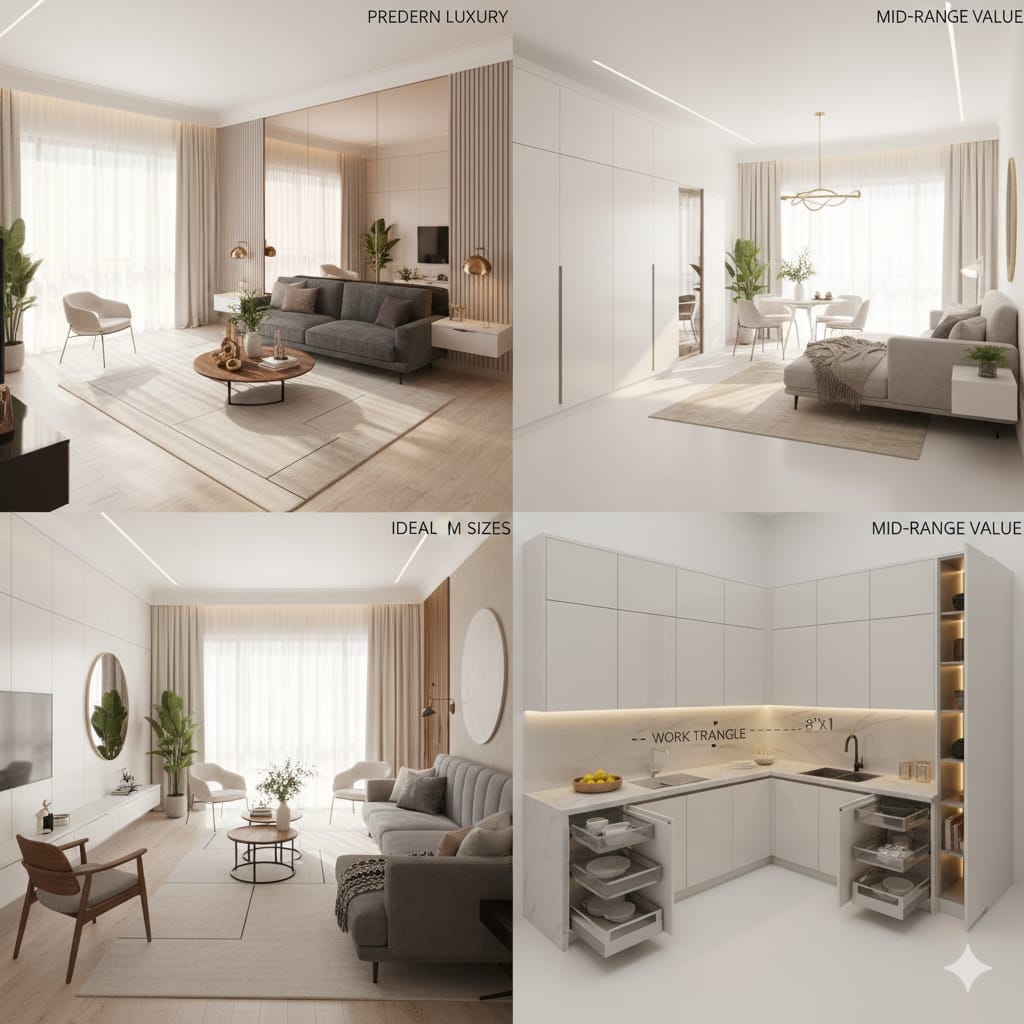
1. Compact Linear Layout
This format is common in urban apartment towers. Rooms are arranged along a single corridor. The living room connects to both bedrooms.
Advantages
- Simple circulation
- Clear separation between private and social zones
- Suitable for 650–850 sq. ft. units
Limitations
- Corridor space may feel wasted
- Limited flexibility for open planning
This layout works best when storage is built vertically and corridors include concealed cabinets.
2. Open Living–Dining Layout
In this plan, the living and dining spaces merge into one larger rectangular zone. The kitchen may remain semi-open or fully open.
Advantages
- Spacious visual feel
- Better natural light distribution
- Suitable for families who entertain guests
This layout is ideal for 850–1,100 sq. ft. apartments. However, planning furniture placement becomes important. A sofa should not block circulation. The dining table must not interrupt balcony access.
3. Split Bedroom Layout
Here, the master bedroom and second bedroom are placed on opposite sides of the living room.
Advantages
- Higher privacy
- Suitable for joint families or tenants
- Reduces sound disturbance
This configuration is increasingly popular among working couples sharing space with parents.
4. Corner 2 BHK Layout
Corner flats receive light from two directions. Cross ventilation improves comfort and reduces dependency on artificial cooling.
If budget allows, a corner 2 BHK is often a better long-term investment due to natural lighting advantages.
Space Optimisation: Design That Works Harder
Optimisation is not about squeezing furniture into a room. It is about aligning function with scale.
1. Living Room Planning
The living room is the most visible space. In a 2 BHK, it must perform multiple roles.
Expert Tip:
Choose a sofa proportional to the wall length. Oversized sectionals reduce flexibility. A compact three-seater with movable chairs works better.
Television units should integrate concealed storage. Floating units make the room feel lighter. Avoid heavy floor-mounted cabinets in compact apartments.
Use vertical walls intelligently:
- Tall shelving with closed cabinets below
- Wall-mounted lighting instead of floor lamps
- Foldable nesting tables
2. Master Bedroom Strategy
The master bedroom should prioritise storage and restful aesthetics.
Key dimensions:
- Minimum 10 ft x 11 ft for comfort
- 2 ft clearance around the bed
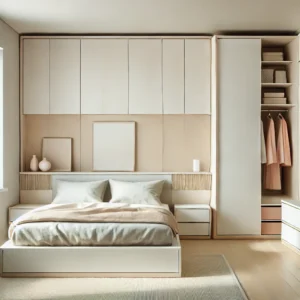
Sliding wardrobes work well in tight spaces. Floor-to-ceiling wardrobes reduce dust accumulation and maximise capacity.
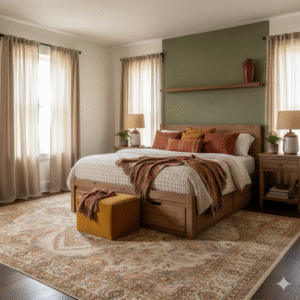
Neutral tones with soft textures create a calming atmosphere. In smaller bedrooms, large dark wardrobes can overpower the room. Matte finishes are more refined and easier to maintain.
3. Second Bedroom Flexibility
The second bedroom must adapt. In many homes, it functions as:
- Guest room
- Study
- Children’s bedroom
- Home office
Instead of fixed bulky furniture, opt for modular pieces:
- Wall-mounted study desks
- Murphy beds
- Sofa-cum-beds
- Loft storage
This room should remain flexible. Avoid permanent heavy cabinetry unless the function is permanent.
4. Kitchen Layout Planning
In 2026, kitchens are more efficient and compact. The common configurations are:
- L-shaped
- Parallel
- Straight-line
For smaller 2 BHK units, L-shaped kitchens allow better movement. Parallel kitchens are efficient for larger 2 BHK layouts above 1,000 sq. ft.
Storage planning should include:
- Deep drawers for utensils
- Tall pantry units
- Overhead cabinets up to ceiling height
Glossy laminates reflect light but show fingerprints. Matte finishes look cleaner over time.
5. Balcony as an Extension
Balconies are often neglected. In compact apartments, they can serve as:
- Reading corners
- Mini garden spaces
- Breakfast seating
- Compact laundry zones
Avoid cluttering balconies with random storage. Keep them intentional. Foldable seating works well.
Smart Zoning Principles
Zoning defines how public and private spaces interact.
A well-zoned 2 BHK should:
- Keep the master bedroom away from the entrance
- Avoid direct visibility of bedrooms from the main door
- Place the dining area near the kitchen
- Maintain clear pathways without obstruction
These small spatial decisions influence comfort more than decorative elements.
Lighting Strategy for 2 BHK Apartments
Lighting defines perception of size.
Three layers of lighting are recommended:
- Ambient lighting – ceiling lights for overall brightness
- Task lighting – study lamps, kitchen under-cabinet lights
- Accent lighting – wall washers or cove lighting
In smaller apartments, excessive false ceilings reduce height. Keep ceiling design minimal.
Natural light should not be blocked by heavy curtains. Sheer drapes combined with blackout curtains offer flexibility.
Storage Without Visual Clutter
Storage is often the difference between an organised home and a chaotic one.
Hidden storage ideas:
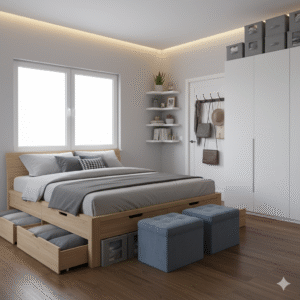
- Hydraulic beds
- Storage benches in dining areas
- Shoe cabinets integrated into entrance partitions
- Mirror cabinets in bathrooms
Avoid open shelving in compact homes unless styled carefully. Closed storage maintains visual calm.
Materials and Finishes for 2026
Trends for 2026 reflect warmth and simplicity.
Popular finishes:
- Light oak laminates
- Fluted panels
- Textured paint finishes
- Earthy neutral palettes
High-gloss marble floors are gradually being replaced with matte vitrified tiles and engineered wood in bedrooms.
Durability matters. In humid cities, moisture-resistant plywood is preferred for kitchen and bathroom units.
Common Planning Mistakes in 2 BHK Apartments
Many homeowners focus only on aesthetics. Planning mistakes often appear later.
- Oversized furniture blocking pathways
- Ignoring electrical planning before modular installation
- Placing wardrobes where door swings clash
- Overloading walls with decorative panels
- Poor ventilation in bathrooms
A design must respond to routine behaviour, not only visual trends.
Expert Perspective: Designing for Long-Term Value
A 2 BHK apartment is often a long-term investment. Design should consider resale value.
Neutral colour palettes appeal to wider buyers. Excessively personalised themes may limit appeal.
Quality hardware in wardrobes and kitchen units increases durability. Soft-close hinges, good drawer channels, and anti-termite treatment improve lifespan.
Acoustic comfort is another factor often ignored. Bedroom walls adjacent to lifts or staircases require insulation planning.
Budget Planning for 2 BHK Interiors in 2026
Interior costs vary across cities. However, average mid-range interior design for a 2 BHK in India may range between ₹8 lakh to ₹18 lakh depending on scope.
Cost depends on:
- Carpentry volume
- False ceiling design
- Material selection
- Civil modifications
- Custom furniture
Prioritise foundational elements first. Structure, storage, lighting, and layout planning should take precedence over decorative upgrades.
The Behomly Approach to 2 BHK Planning
At Behomly, we believe design is not decoration. It is structured thinking applied to space.
Our approach focuses on:
- Layout clarity before material selection
- Storage mapped to lifestyle patterns
- Balanced proportion in furniture scale
- Calm colour systems
- Long-term durability
Every 2 BHK apartment has potential. The difference lies in how intelligently the plan is interpreted.
We do not treat rooms in isolation. We study how the kitchen interacts with dining, how the living room frames the entrance, and how bedrooms remain private yet connected.
Final Thoughts
A well-planned 2 BHK apartment supports daily routines without friction. It offers flexibility for growth, privacy for individuals, and warmth for gatherings.
In 2026, apartment planning demands more than modular installations. It requires thoughtful zoning, measured furniture selection, layered lighting, and disciplined storage design.
If you are planning your 2 BHK interiors, focus first on layout logic. Square footage alone does not define comfort. Spatial intelligence does.
With structured planning and informed material choices, a 2 BHK can feel composed, spacious, and distinctly personal.
Design should feel intentional. When planning aligns with lifestyle, even a compact apartment becomes deeply functional and refined.
Frequently Asked Questions
What is the most space-saving layout for a 2 BHK?
A square, zero-passage layout is the most space-saving option for a 2 BHK apartment. It eliminates internal hallways and allocates the saved square footage to the living and sleeping areas, making the flat feel more spacious.
Can I change the location of the kitchen in my 2 BHK?
Changing the kitchen location is difficult because it depends on existing plumbing stacks and drainage lines in the building. You should consult a professional architect to see if a relocation is possible without violating building codes or structural integrity.
How do I decide between an open and closed kitchen?
An open kitchen is ideal if you want to make your 1 BHK feel larger and enjoy social interaction while cooking. A closed kitchen is better if you do heavy Indian cooking and wish to contain heat, oil, and aromas within a separate area.